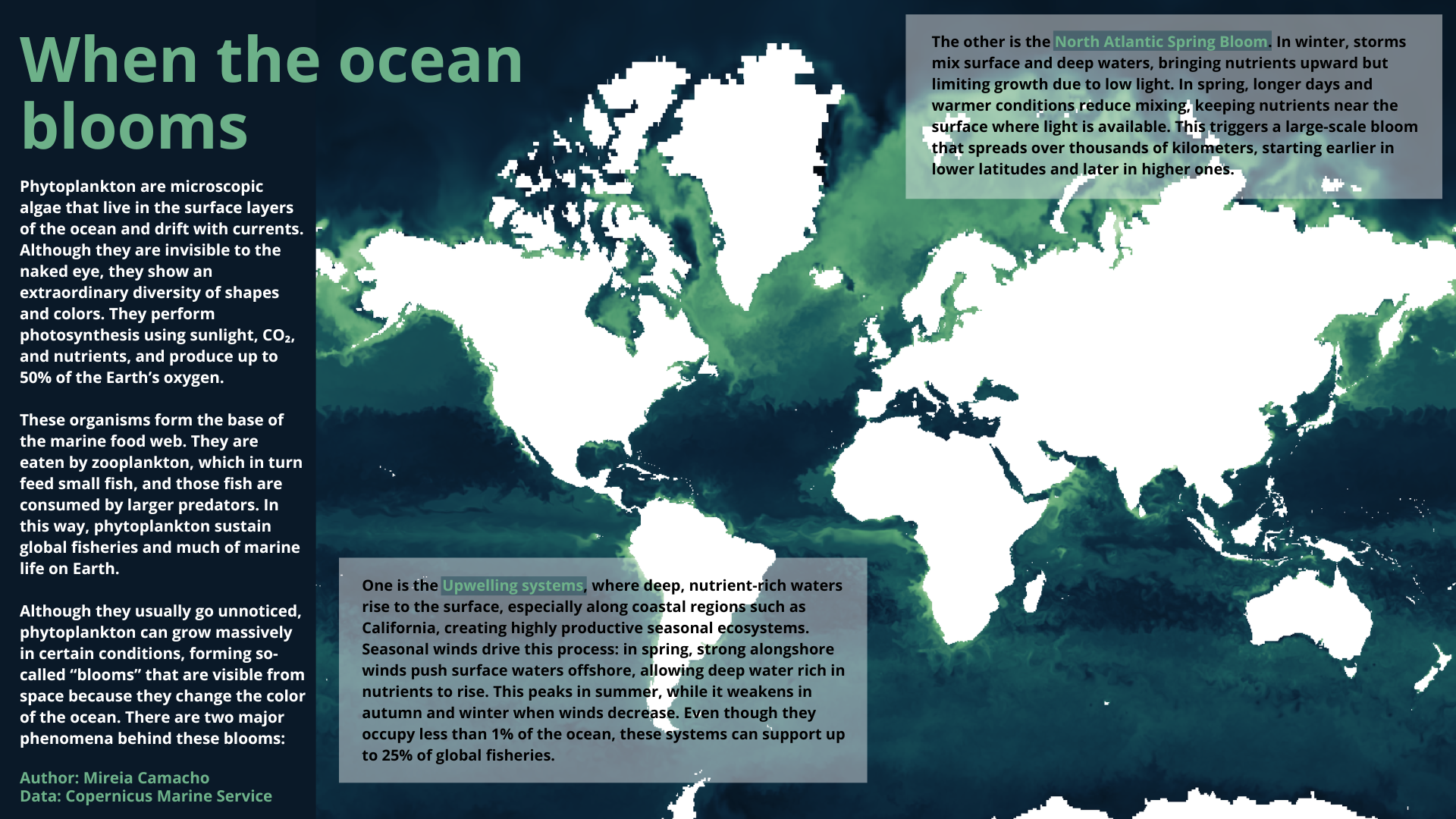
When the ocean blooms
- Mireia Camacho
- Data visualization
- June 19, 2026
Phytoplankton are microscopic algae. They live in surface waters and float and drift with the currents. They have an impressive variety of shapes, colors, and patterns. Why are they so important?
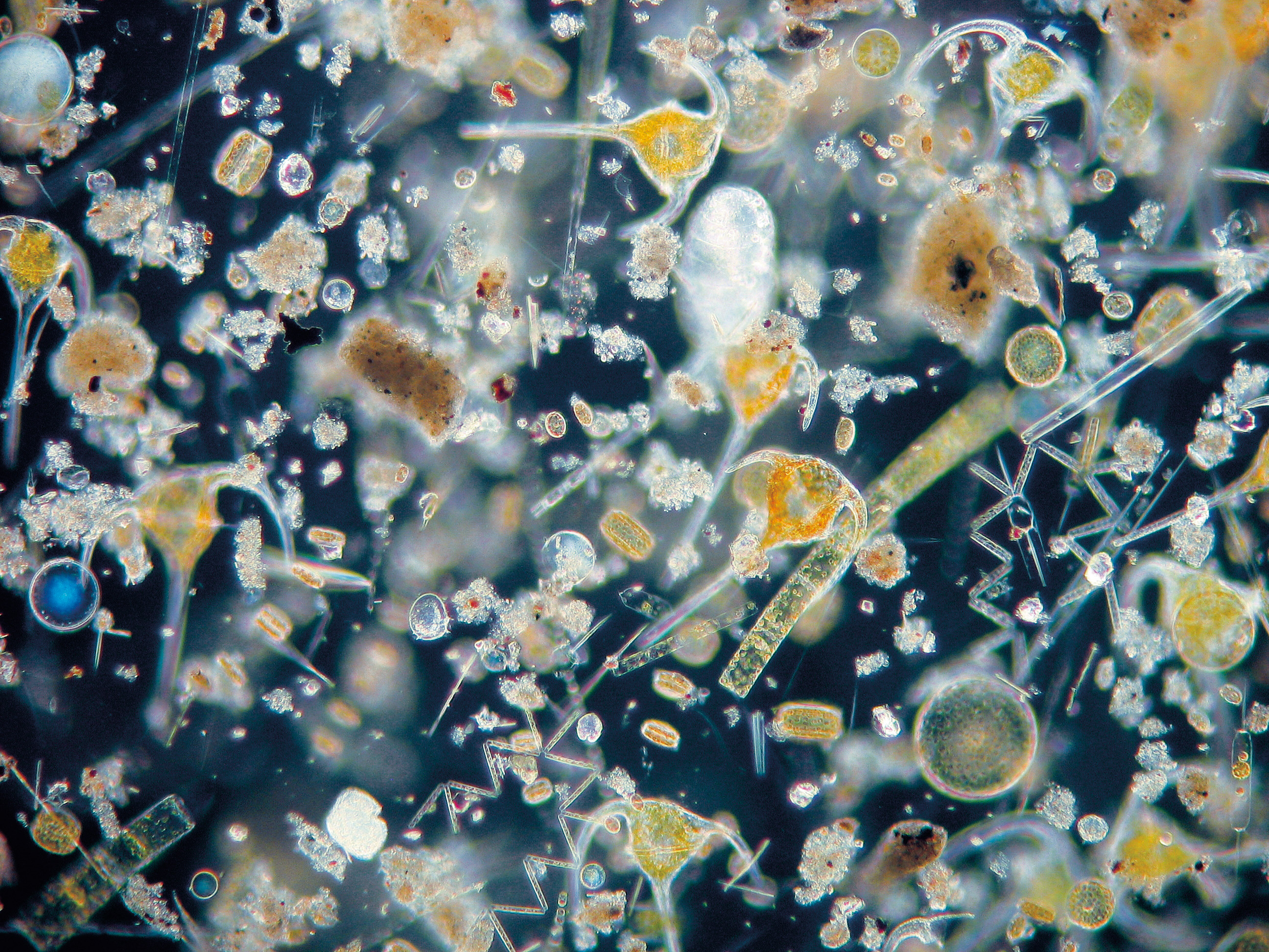 Phytoplankton. Photo by Annegret Stuhr, GEOMAR
Phytoplankton are photosynthetic organisms. They use sunlight, carbon dioxide (CO₂), and nutrients to produce energy through photosynthesis. They perform the same role as plants on land and produce up to 50% of the Earth's oxygen.
Even though they are microscopic, they form the base of the marine food web. Phytoplankton are eaten by zooplankton, which in turn feed small fish, which are then consumed by larger fish and other predators. This chain supports higher trophic levels and sustains global fisheries.
Although individual phytoplankton cannot be seen with the naked eye, large concentrations can tint the color of the ocean and become visible from space. This is known as a Bloom.
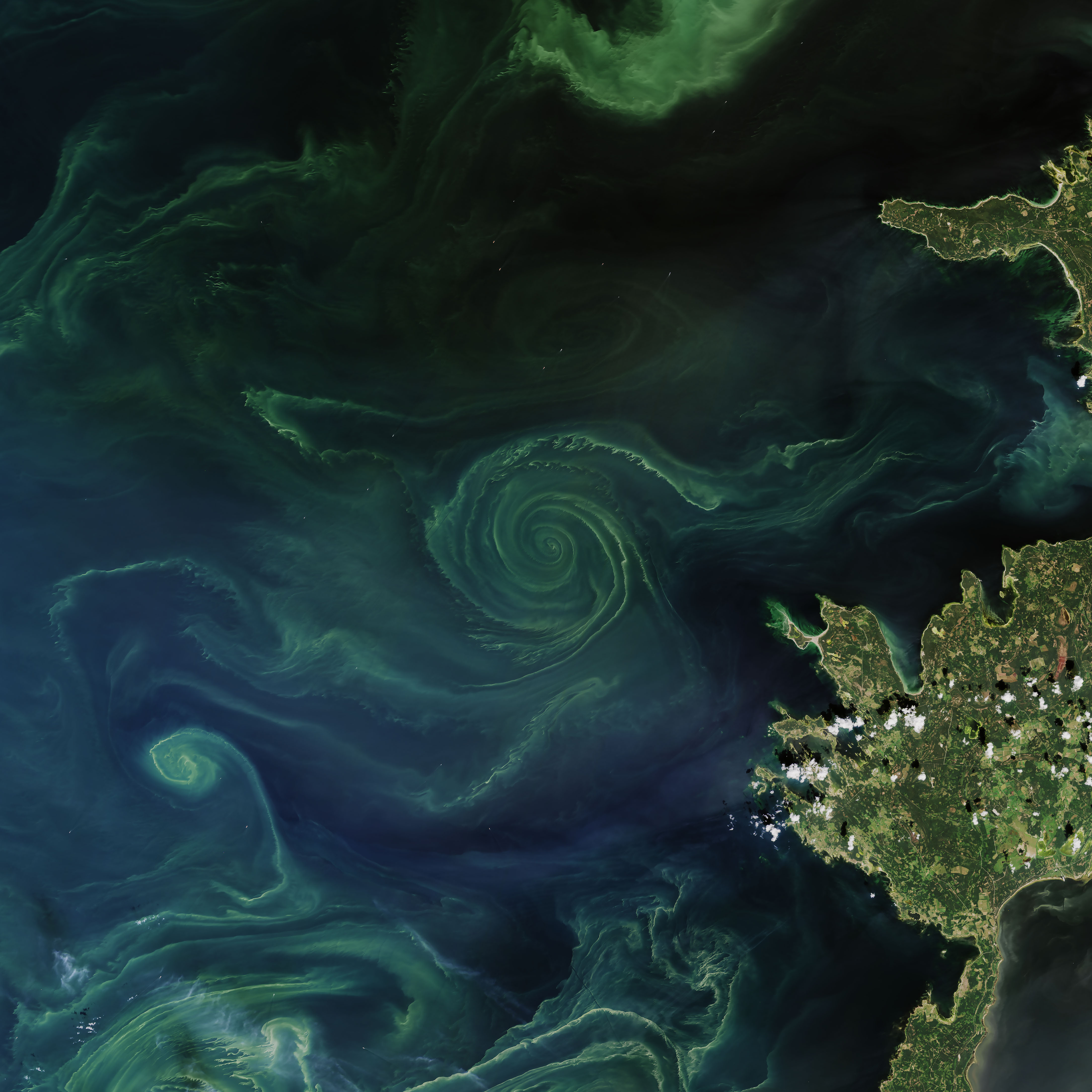 Bloom in the Baltic sea. Photo by NASA Science
Blooms can display a wide range of colors, creating striking contrasts with the deep blue ocean waters. They generate massive patterns, forming edges, waves, and filaments that can cover vast areas of the ocean.
However, blooms do not occur everywhere, as phytoplankton do not grow uniformly throughout the ocean. Their distribution is highly variable and influenced by factors such as sunlight, temperature, nutrient availability, and ocean currents.
There are two major bloom-related phenomena in the oceans. They occur in different regions and operate through different mechanisms, but they are linked by similar processes involving nutrient availability for phytoplankton growth.
The first phenomenon is the Upwelling Systems. There are four major regions in the world, located along the eastern boundaries of the Atlantic and Pacific Oceans. This system contributes up to 25% of global fisheries while occupying less than 1% of the ocean area.
In the California region, this phenomenon is strongly seasonal. During spring, northerly winds become intense and blow along the coast toward the equator. This causes cold, deep, nutrient-rich water to rise to the surface and establish ideal conditions for upwelling to reactivate. Maximum intensity is reached during summer.
In autumn and winter, the winds weaken, and so does the biological productivity of the region.
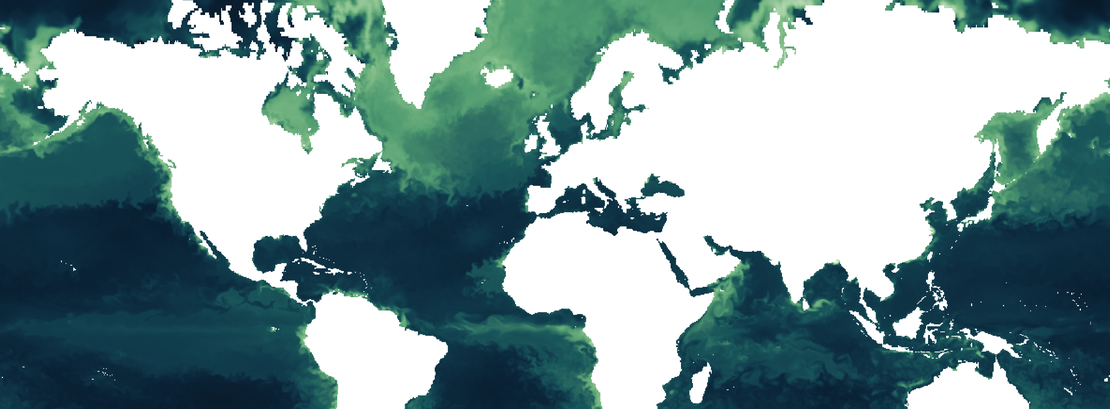
The second phenomenon is the North Atlantic Spring Bloom. This is one of the most significant biological events in the world's oceans. It occurs every year in spring and can extend over thousands of kilometers, making it clearly visible from satellites.
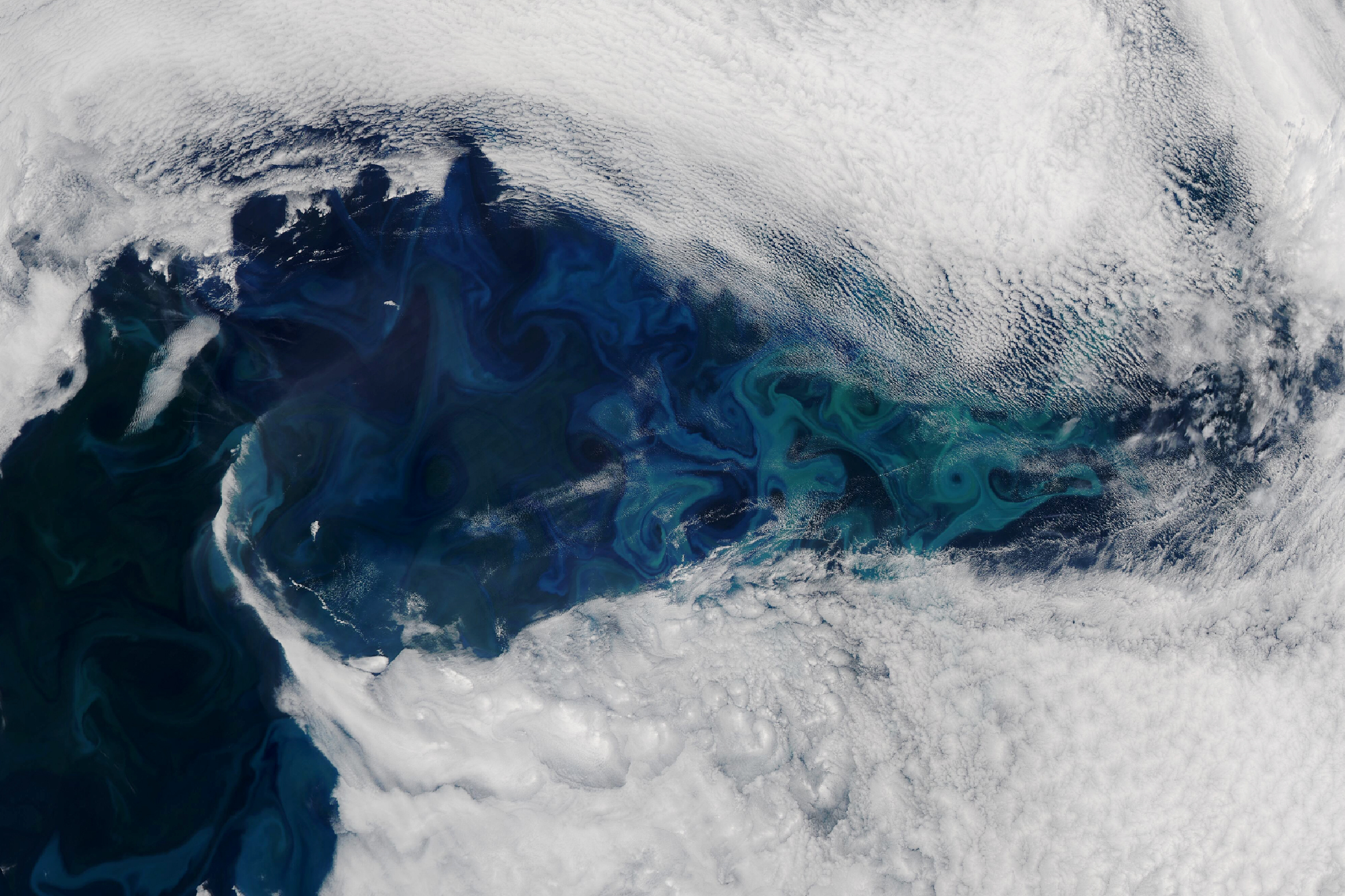 The North Atlantic Spring Bloom captured by NASA in 2024
During winter, daylight hours are shorter and the ocean surface cools. Storms become stronger and mix surface waters with deeper waters. As explained in the upwelling phenomenon, this mixing brings nutrients from deep waters to the surface. However, because sunlight is limited during winter, conditions are not favorable enough for phytoplankton to grow rapidly.
In spring, longer days and stronger sunlight warm the ocean’s surface, reducing the mixing between surface and deeper waters. As a result, nutrients brought up during winter remain available near the surface, where phytoplankton can access both abundant nutrients and sunlight.
These favorable conditions promote rapid phytoplankton growth through photosynthesis, leading to the spring bloom. As summer progresses, surface nutrients become depleted, causing phytoplankton abundance to decline until conditions become favorable again the following spring.
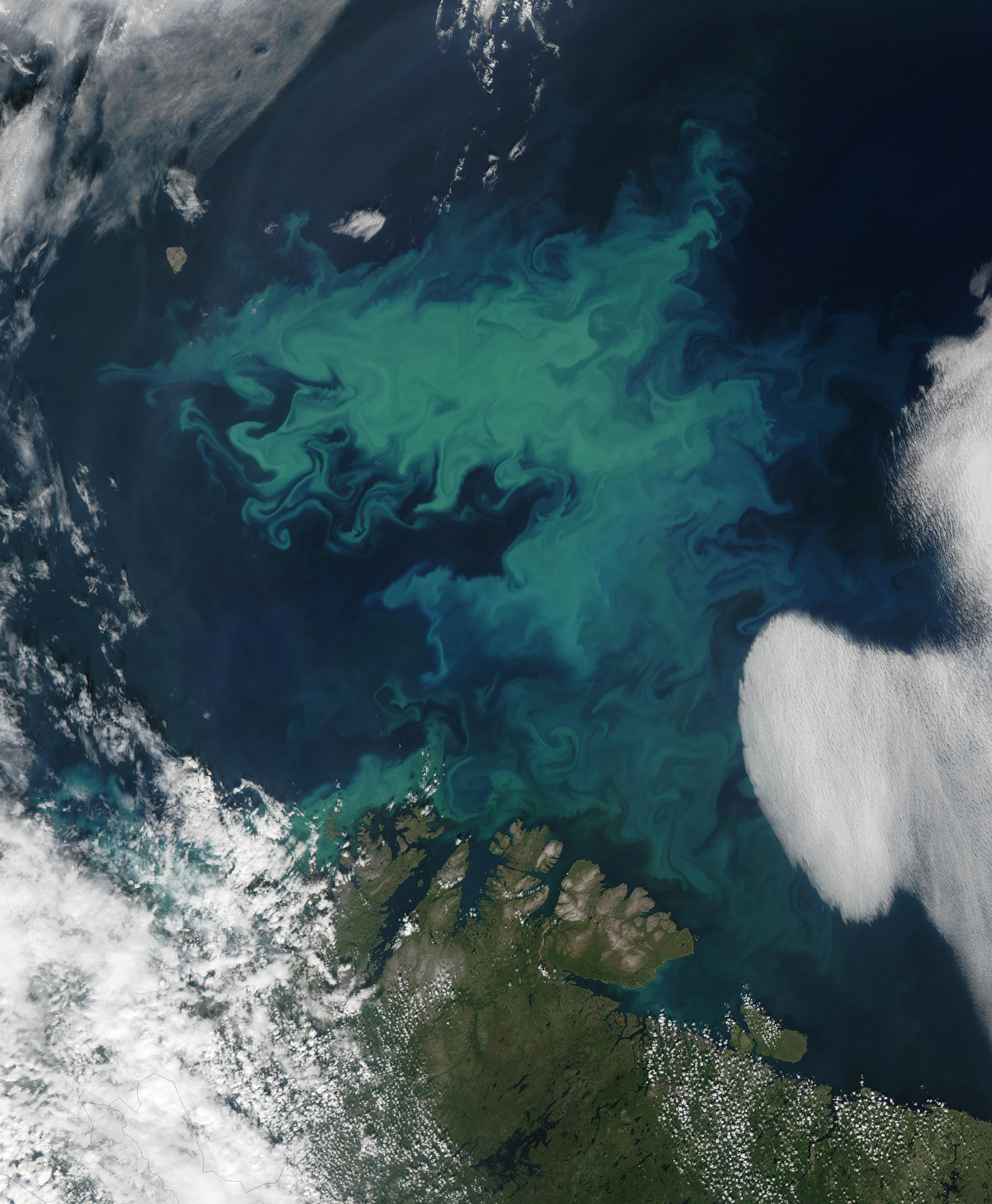 Bloom in Norway coasts. Photo by NASA Science
As the North Atlantic Spring Bloom extends across thousands of kilometers, it does not occur everywhere at the same time. It starts earlier in lower-latitude regions and appears later at higher latitudes.
Most of the time, phytoplankton remain invisible beneath the ocean surface. Yet their seasonal blooms transform vast regions of the sea and sustain life throughout the marine food web. From microscopic cells to patterns visible from space, their influence reaches across the entire planet.

Here you can explore how phytoplankton population change over 2025 or view a specific month by clicking.
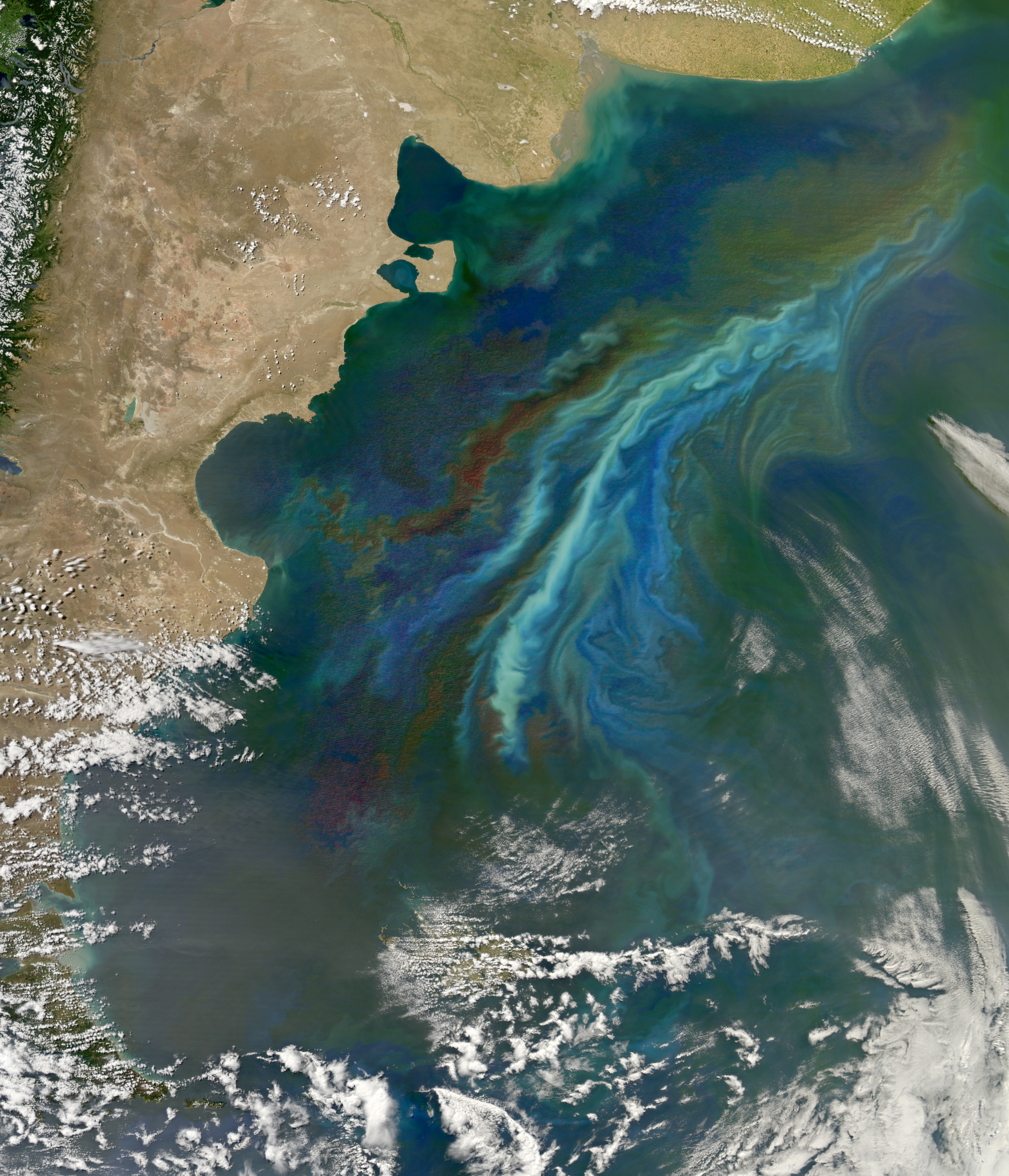 Colorful bloom in Patagonia. Photo by NASA Science
This piece was created for the Dataviz Challenge established by the Copernicus Marine Service with the aim of making visible and raising awareness of the phenomena that occur in the planet's oceans with the information provided by Elodie Gutknecht. Thank you for getting this far. I hope you found the role of phytoplankton as interesting as I did when choosing the challenge's theme.